Only a few days old
Baby turtles cause true “turtle mania”
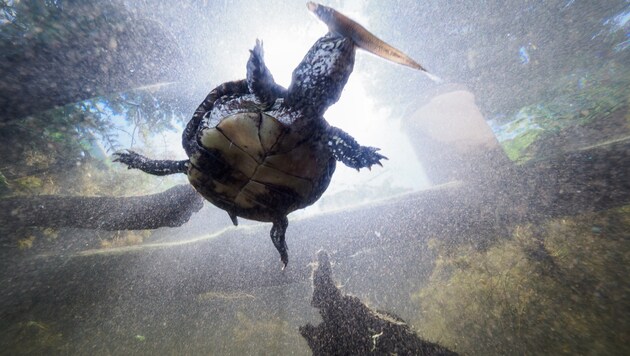

The House of Nature at the Museum of Lower Austria is currently buzzing with excitement: six pond turtles have seen the light of day in St. Pölten.
 Kronen Zeitung als bevorzugte Google-Quelle hinzufügen
 Six little baby turtles are currently causing quite a stir at the Museum NÖ in St. Pölten. Shielded from the prying eyes of visitors, they are growing and thriving under the watchful eyes of the zookeepers. "The young animals are optimally cared for in the quarantine area," they say.
There are already seven European pond turtles to marvel at, which hatched a year ago. The animals can be observed in the pond in the museum garden until the onset of hibernation when temperatures drop.
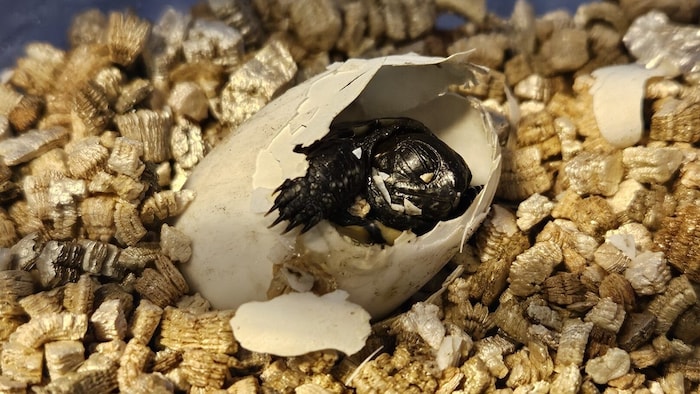

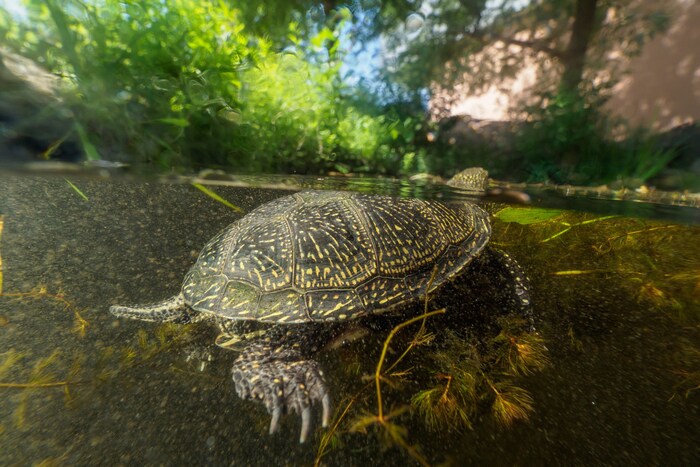

The House of Nature owes the offspring of European pond turtles to a party-loving mother turtle: while the summer festival with live music karaoke was providing a great atmosphere in the museum garden in June, the "child-bearing" mother turtle laid her eggs. Around 60 days passed, but this week the time had come: six small specimens of the only native turtle species saw the light of day in the state capital.
Eggs are buried in the sand
"It is impressive that the baby animals, which are about the size of a coin, can survive in the wild for several months before they become active. So if winter sets in after hatching, they can even hold out until spring," explains Marlene Zechel, Head of Animal Care at Museum NÖ.

The Reptile Day at the Haus für Natur on September 28th is all about optimal husbandry conditions. Some of the young animals will be given to other zoos as part of a cooperation.
Ronald Lintner, wissenschaftlicher Leiter des Haus für Natur im Museum NÖ in St. Pölten
In the wild, European pond turtles are mainly found in the Donauauen National Park. Up to 1500 specimens are said to have found their habitat here. The "wild animals", which are threatened with extinction (they are on the Red List), are not only protected but also researched with great dedication.
Endangered species on the Red List
The European pond turtle lives mainly in water. Their natural predators include sea eagles and otters - they can be dangerous to adult turtles. However, the endangered animals are also carnivores themselves. Their prey ranges from worms, snails and aquatic insects to amphibians and fish.
This article has been automatically translated,
read the original article here.











Da dieser Artikel älter als 18 Monate ist, ist zum jetzigen Zeitpunkt kein Kommentieren mehr möglich.
Wir laden Sie ein, bei einer aktuelleren themenrelevanten Story mitzudiskutieren: Themenübersicht.
Bei Fragen können Sie sich gern an das Community-Team per Mail an forum@krone.at wenden.