Five earthquakes in 2025
This is why the walls shake so often in Tyrol
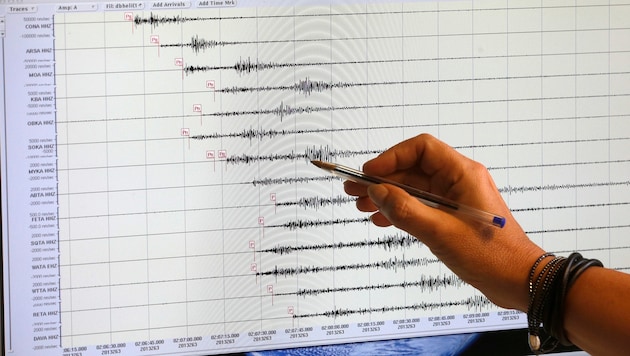

Tyrol leads the earthquake statistics almost every year. Last year, there were around 50 tremors in the Waidring area alone. The series continues this year. The reason: Tyrol is located on a tectonic fault zone.
 Kronen Zeitung als bevorzugte Google-Quelle hinzufügen
 The walls shook again in Tyrol on Wednesday night! The earth tremors, which were felt in the Imst area and partly also in the Lech Valley, reached a magnitude of 2.3. This was the fifth noticeable earthquake in the region this year. "The strongest, with a magnitude of 3.1, was registered on February 13 south of Wörgl," says seismologist Rita Meurers from GeoSphere Austria. Damage, such as small cracks in facades, is possible at this magnitude. "In this case, however, the focal depth was eleven kilometers," explains the earthquake expert.
Half of 140 quakes in Tyrol
But why does the earth keep shaking, especially in Tyrol? "The province lies along a tectonic fault zone," says Meurers. These weak points in the rock are more prone to fractures. When plates shift, at some point the rock can no longer withstand the friction and a fracture occurs - we feel this as an earthquake. Of the total of around 140 earthquakes that were felt by the population in Austria last year, around half occurred in Tyrol. "The high number in 2024 was mainly due to a series of quakes in the Waidring area, where 50 earthquakes were felt," explains Meurers.
However, the tremors in Tyrol have nothing to do with the quake wave on Santorini. "That's also too far away."
This article has been automatically translated,
read the original article here.











Da dieser Artikel älter als 18 Monate ist, ist zum jetzigen Zeitpunkt kein Kommentieren mehr möglich.
Wir laden Sie ein, bei einer aktuelleren themenrelevanten Story mitzudiskutieren: Themenübersicht.
Bei Fragen können Sie sich gern an das Community-Team per Mail an forum@krone.at wenden.