Tyrolean researchers:
Ageing brain cells forget who they are
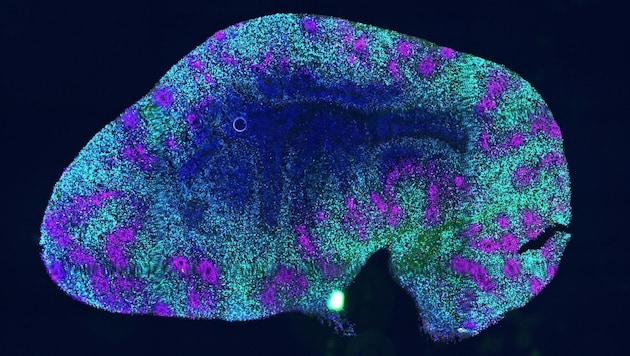

Ageing brain cells sometimes forget who they actually are. This was discovered by researchers at the University of Innsbruck, who grew "mini-brains" - so-called organoids from human stem cells - in laboratory dishes and artificially induced ageing processes in them.
 Kronen Zeitung als bevorzugte Google-Quelle hinzufügen
 This resulted in markings on the genetic material of the brain nerve cells that determine their identity, reports Frank Edenhofer from the University of Innsbruck, who, together with his research colleagues, was able to show for the first time that organoids can age, in a press release from the Austrian Science Fund (FWF).
Miniature organoids from stem cells are excellent experimental models for human organs such as the heart and brain, but there has been a catch, especially for ageing research, said Edenhofer from the Institute of Molecular Biology at the University of Innsbruck in the interview: "This is because it is very young tissue, similar to that of a foetus." However, there are known diseases caused by genetic defects that trigger premature ageing, for example in the protein progerin.
Researchers made mini brains "rust"
The researchers have now introduced the template (the gene) for altered progerin into the brain organoids and were then able to observe ageing processes in them. As in real human brains in advanced age, the activity of the "cell power plants" (mitochondria) decreases and the mini-brains literally "rust", said Edenhofer. Oxygen causes "oxidative damage" in their cells, just as it does with iron, which accumulates over time and impairs function.
As the "rust damage" to the genetic material increased, the "epigenetic markers" that shape the cell type eroded, according to the stem cell researcher: "We have found a gene that is important both for the repair of the genetic material and for the maintenance of these epigenetic markers." Tests in the mini-brains will now show whether this could possibly delay the ageing of the brain.
Search for neuro-wells of youth
The researcher also wants to test whether brain nerve cells can be rejuvenated with various pharmacological interventions. There are a number of substances that could be considered for this, for example spermidine, he said: "We can now analyze their mode of action in a model for the first time and perhaps discover new active substances and strategies."
With the mini-brains, it would be possible to study the development of neurodegenerative diseases such as Alzheimer's or Parkinson's in the laboratory in more detail. Together with colleagues in Luxembourg, the Innsbruck researchers have therefore grown and aged mini-brains in which the early effects of Parkinson's disease are recognizable.
This article has been automatically translated,
read the original article here.











Da dieser Artikel älter als 18 Monate ist, ist zum jetzigen Zeitpunkt kein Kommentieren mehr möglich.
Wir laden Sie ein, bei einer aktuelleren themenrelevanten Story mitzudiskutieren: Themenübersicht.
Bei Fragen können Sie sich gern an das Community-Team per Mail an forum@krone.at wenden.