Ice crystals from dust
Caused by humans: how industrial snow is created
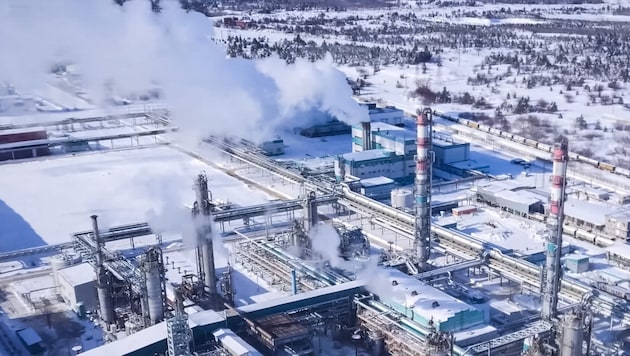

So-called industrial snow caused temporary winter conditions in parts of Vienna at the turn of the year. The Geosphere calls this phenomenon "anthropogenic snowfall". High fog and an inversion situation would cause the white splendor.
 Kronen Zeitung als bevorzugte Google-Quelle hinzufügen
 Inversions are weather situations that cause particulate matter to accumulate in the colder layers of air near the ground. According to the Geosphere weather lexicon (formerly the Central Institute for Meteorology and Geodynamics, ZAMG), "industrial snow" as precipitation is caused "by emissions of water vapor and condensation nuclei from large industrial plants, combined heat and power plants or domestic fires, which freeze in the high fog layer and in some cases also resublimate (direct transition from water vapor to ice crystals)".
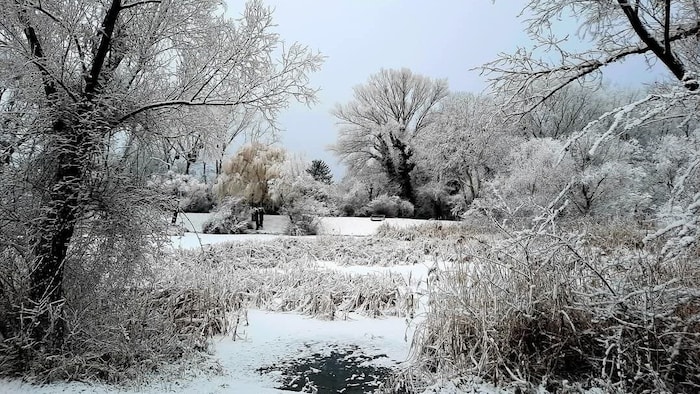
Industrial snow is more difficult to forecast
These snowfalls occur locally in urban areas - and unlike conventional snow, they are also more difficult to forecast.
Only in the vicinity of large industrial plants
The presence of "large" industrial plants in areas with high fog in the winter months is a given in Austria in the Vienna and Graz basins, but also in the Mur-Mürz furrow in Styria as well as in the Klagenfurt basin in the south and the western Danube valley in Upper Austria. "These industrial plants operate 24 hours a day, seven days a week, supplying the additional moisture and aerosol required, which ultimately increases the likelihood of industrial snow", the experts say. Domestic fires (combustion in private households such as in stoves, fireplaces and heating stoves) should also not be underestimated, although they have been on the decline in recent years for environmental reasons.
Differences to conventional snow
Industrial snow also differs from conventional snow; according to the weather lexicon, it is often ice crystals rather than snowflakes due to the lower fall height - it is therefore often referred to as snow dust or glistening snowfall. It also adheres more easily to surfaces, which in turn can lead to slippery roads. And due to its formation with the help of industrial plants, it is also more polluted than "normal" snow.
This article has been automatically translated,
read the original article here.











Da dieser Artikel älter als 18 Monate ist, ist zum jetzigen Zeitpunkt kein Kommentieren mehr möglich.
Wir laden Sie ein, bei einer aktuelleren themenrelevanten Story mitzudiskutieren: Themenübersicht.
Bei Fragen können Sie sich gern an das Community-Team per Mail an forum@krone.at wenden.