New institute director
How research is preparing for the next pandemic
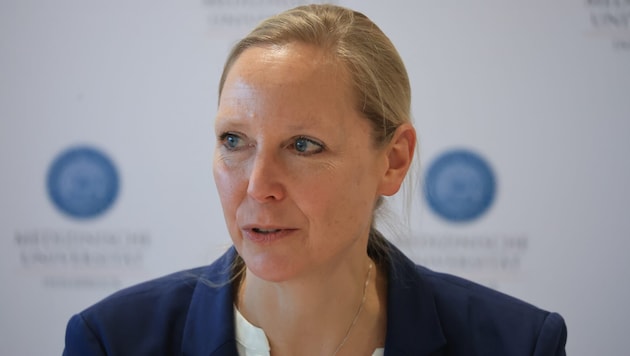

The new director of the Institute of Virology in Innsbruck, Gisa Gerold, keeps an eye on potentially dangerous pathogens and knows how important it is to be prepared for the next pandemic. Because it "will come", she emphasizes.
 Kronen Zeitung als bevorzugte Google-Quelle hinzufügen
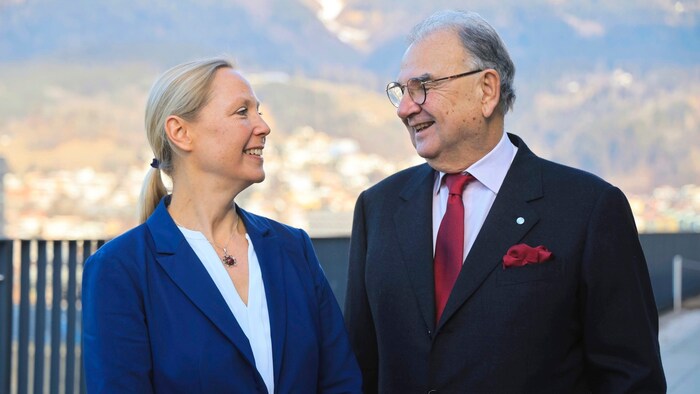
 "Five years after the start of the pandemic, I don't think I need to explain how important virology is," says MedUni Rector Wolfgang Fleischhacker, introducing Gisa Gerold. The new Director of the Institute of Virology took over the post from Dorothee von Laer on November 1.
Via Berlin and New York to Innsbruck
Gerold, who has held positions at the Max Planck Institute in Berlin, Rockefeller University in New York and Umea University in Sweden, among others, wants to offer modern teaching in Innsbruck, continue to uphold diagnostics and also share the work of virologists with the public - for example online via virologie.i-med.ac.at
In her research, the North German focuses on pandemic preparedness and emerging viruses. She is intensively investigating pathogens that are increasingly making their way to Europe from more southern regions.

We have a platform technology that can be quickly adapted to new viruses. You can't develop a vaccine overnight, but we used to talk about periods of 10 to 15 years.
Gisa Gerold, Direktorin Institut für Virologie
"The next pandemic will come"
Gerold agrees with the opinion of many virologists: "The next pandemic will come. We observe outbreaks every five to ten years," she says, referring to Zika, dengue fever and swine flu.
Bird flu is currently being monitored particularly closely. "We know that the current type of virus can be transmitted to mammals," explains the scientist. Transmission to humans is currently unlikely, but cannot be ruled out. "However, the current version causes a low mortality rate." However, contact with other flu viruses in the body could result in a more dangerous pathogen.
Vaccine development faster than before
MedUni and AGES have prepared test methods just in case. The virologist also believes that research is prepared for the next possible pandemic: "We have a platform technology that can be quickly adapted to new viruses. You can't develop a vaccine overnight, but we used to talk about periods of 10 to 15 years."
This article has been automatically translated,
read the original article here.











Da dieser Artikel älter als 18 Monate ist, ist zum jetzigen Zeitpunkt kein Kommentieren mehr möglich.
Wir laden Sie ein, bei einer aktuelleren themenrelevanten Story mitzudiskutieren: Themenübersicht.
Bei Fragen können Sie sich gern an das Community-Team per Mail an forum@krone.at wenden.