Pagers, hackers, malware
Technology as a weapon: the invisible Middle East war
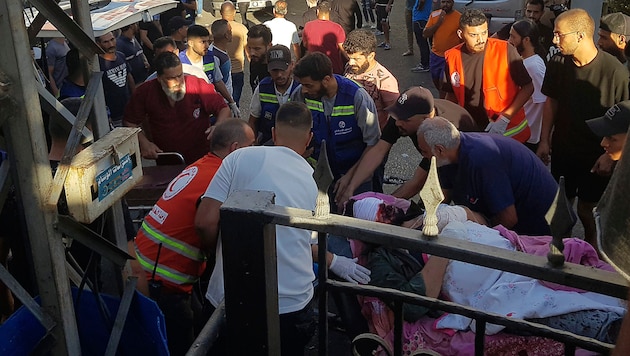

A short beep, a small explosion - Lebanon witnessed an attack that blurs the boundaries between conventional and electronic warfare. In an instant, it became clear: no one is safe from the new threat.
 Kronen Zeitung als bevorzugte Google-Quelle hinzufügen
 Hundreds of explosions rocked Lebanon at the same time on Tuesday evening. The target: members of the Shiite Hezbollah militia who were equipped with the pagers. The group, which is hostile to Israel, actually wanted to use the old technology to protect itself from surveillance - and was itself the target of a well-coordinated attack.
Devices were apparently intercepted
The "New York Times" reported, citing government representatives, that Israeli agents had intercepted the devices beforehand and attached small amounts of explosives along with a code. This code was then used to detonate the devices.
Chaotic scenes could be seen throughout the country, and the hospitals of the already ailing healthcare system were completely overloaded. Many bystanders were also injured. Just one day later , numerous devices exploded again, this time walkie-talkies.
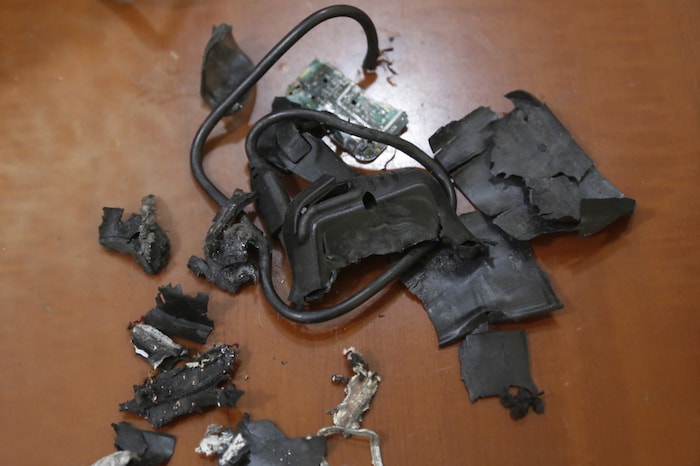
In an analysis, two authors from the International Institute for Strategic Studies described the alleged Israeli operation as a "humiliating blow" and a "serious operational security failure on the part of Hezbollah". Meanwhile, the group announced revenge. However, experts say that this attack was not a classic cyberattack. There are other examples of this.
Reminiscent of Stuxnet
The best-known case of a cyber attack on industrial infrastructure is probably still the Stuxnet virus discovered in 2010, which sabotaged uranium enrichment facilities in Iran. The sophisticated computer virus targeted the uranium enrichment centrifuges and caused their physical destruction. Stuxnet is considered the world's first known cyber weapon. The secret services of Israel and the USA were quickly suspected as the originators, and this was later confirmed by unnamed government officials in media reports.
As a result, Iran tightened its security precautions and secrecy policy with regard to its nuclear program. Even years after the incident, which affected the Natanz complex in the country's center, mistrust remains high. The Iranian nuclear program has long been the focus of attention after the country was suspected of having a clandestine nuclear weapons program. The political and religious leadership in Tehran denies this and asserts that it only uses nuclear technology for civilian purposes.
Since the 1979 revolution, the USA and Israel have been considered arch-enemies of the Islamic Republic. With the outbreak of the Gaza war just under a year ago, there were several threats that the shadow conflict would develop into a conflagration. In revenge for the killing of a high-ranking general, Iran's Revolutionary Guards, the country's elite military force, fired hundreds of drones and missiles at Israel in April in an unprecedented attack.
For years, Israeli politicians have been worried about the threatening tones of the state leadership in Tehran, which denies the Jewish state's right to exist. Only shortly before the Hamas attack, Iran's head of state Ayatollah Ali Khamenei had reiterated old threats against Israel and described the state as a cancer.
Israel under fire from Iranian hackers
Hackers with links to the Iranian government or groups hostile to Israel also attacked targets in Israel. According to an annual report by the Israeli Cyber Directorate, the number of attacks more than doubled in the months following the outbreak of the Gaza war. The targets affected a wide variety of areas, such as government offices, hospitals and surveillance cameras. According to the report, 800 incidents were classified as having "significant damage potential".
Iranian infrastructure is also regularly hit by mysterious cyber attacks. One cold December day last year, when petrol stations across the country suddenly failed, chaos spread. Iranians fill up with a special system of prepaid cards. It was precisely this network that became the target of a cyber attack, revealing a previously unseen weakness in the infrastructure.
Around two thirds of the country's petrol stations were affected. The Iranian government was quick to blame its arch-enemy Israel for the outage. According to the Israeli newspaper "The Times of Israel", a hacker group called "Gonjeshke Darande" ("Gondscheschk-e Darande", Robbery Sparrow) claimed responsibility for the incident. The group is said to have already carried out cyber attacks on the Iranian steel industry in the past.
This article has been automatically translated,
read the original article here.











Da dieser Artikel älter als 18 Monate ist, ist zum jetzigen Zeitpunkt kein Kommentieren mehr möglich.
Wir laden Sie ein, bei einer aktuelleren themenrelevanten Story mitzudiskutieren: Themenübersicht.
Bei Fragen können Sie sich gern an das Community-Team per Mail an forum@krone.at wenden.