TU Graz researches
How sheep’s wool is becoming a “soil miracle cure”
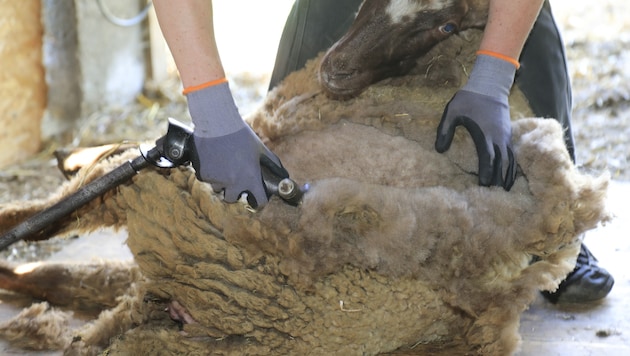

Currently often just waste, new wool could improve soils in the future and allow plants to thrive even in dry conditions. What contribution Graz researchers are making to this visionary project.
 Kronen Zeitung als bevorzugte Google-Quelle hinzufügen
 The winter of 2024/25 was one of the driest on record in Austria - Styria also received more than half less precipitation than usual.
Increasing and more intense periods of drought are also causing problems for our soils and therefore especially for agriculture and forestry. Sheep's wool can be a helpful and previously neglected resource for overcoming this problem, as a current research project by the University of Natural Resources and Life Sciences Vienna and Graz University of Technology aims to show.
Valuable "waste product"
"Research is being carried out into a fertilizer that can ensure both water and nutrient supply over a long period of time, even during drought," explains consortium leader Robert Graimann. Sheep's wool has been used as a garden fertilizer for centuries, and even though sheep's wool pellets are back in fashion, much of the wool still ends up as a waste product.

We are investigating exactly which microorganisms sheep's wool contains and how it can be optimally introduced into the soil.
Samuel Bickel, Forscher an der TU Graz
In combination with a water-storing granulate, the researchers in the "HydroSheepBoost" project are now working with two companies to develop a new product that optimally supplies soils with nutrients and significantly increases their water storage capacity. The microbiome in untreated sheep's wool, which can promote soil organisms, plays a key role in this. "Among other things, our role is to investigate how we can preserve the wool microorganisms in the production process and bring them into the soil," explains project manager Samuel Bickel from Graz University of Technology.
The "HydroSheepBoost" project and other exciting climate topics will be presented on March 28 at the event "When the climate changes our lives" at Schloss Kapfenstein. Info: schloss-kapfenstein.at
This article has been automatically translated,
read the original article here.











Da dieser Artikel älter als 18 Monate ist, ist zum jetzigen Zeitpunkt kein Kommentieren mehr möglich.
Wir laden Sie ein, bei einer aktuelleren themenrelevanten Story mitzudiskutieren: Themenübersicht.
Bei Fragen können Sie sich gern an das Community-Team per Mail an forum@krone.at wenden.