Comparison of quality labels
Many meat labels say nothing about animal welfare
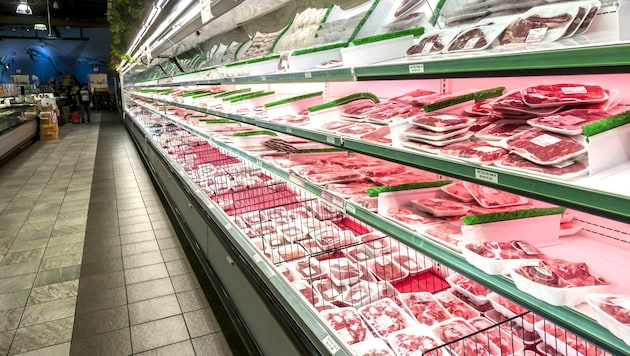

A total of 450,000 tons of pork are produced in Austria every year and end up on restaurant plates or on supermarket shelves. A new analysis by Tierschutz Austria shows that 40 percent of meat labels say nothing about animal welfare, and only 14 percent guarantee clearly higher standards.
 Kronen Zeitung als bevorzugte Google-Quelle hinzufügen
 "Brand owners and producers no longer shy away from inventing bogus labels that confuse consumers", criticizes Esther Kronthaler from Tierschutz Austria about the "bogus labels" when buying meat. A new test shows: Nine out of 22 labels failed, and according to the animal welfare organization, even the majority of meat labels are not compatible with genuine animal welfare.
CO₂ stunning even with organic labels
The animal welfare organization attributes this above all to a ban on crates, fully slatted floors and intact curly tails, which often fall by the wayside. CO₂ stunning, in which the pigs are driven into a gondola and lowered into a CO₂-filled pit, is also not even prohibited by organic labels (such as AMA Bio). For example, this is not an exclusion for the discount store label "Fairantwortung fürs Tier" or the "Fair zum Tier" seal, nor is a ban on crates a criterion there, and the pigs do not have to have access to pasture.
However, even if certain standards apply, this is of little value without monitoring. In extreme cases, inspections only take place every 50 years, according to Tierschutz Austria. If a farm is opened, inspections are carried out, but often not for years. However, this does not generally apply: in some programs, strict inspections are even carried out annually. The AMA now also inspects pig fattening farms in the program annually and therefore more often than prescribed in the directive (every three years). The number of inspections has recently been significantly increased with unannounced visits - so-called spot audits.
Bright spot: 14 percent clearly improve animal welfare
But the rays of hope are few and far between: according to Tierschutz Austria, only 14 percent of the quality seals significantly improve animal welfare. The organization positively highlights "Tierwohl verbessert", "Zurück zum Ursprung" and "Ja! Natürlich". The "Ja!Natürlich Freilandschwein" (Yes! Naturally free-range pig) fared best, with the seal even fulfilling all criteria.
Kronthaler calls for an end to "pseudo labels". The jungle of quality labels confuses consumers and makes it difficult to choose the "right" food in the supermarket. However, it is not only in the supermarket that the lack of clear and transparent labels usually makes it very complicated to pay effective attention to animal welfare. The expert calls for mandatory and comprehensible information on animal husbandry in restaurants and communal catering.
This article has been automatically translated,
read the original article here.











Da dieser Artikel älter als 18 Monate ist, ist zum jetzigen Zeitpunkt kein Kommentieren mehr möglich.
Wir laden Sie ein, bei einer aktuelleren themenrelevanten Story mitzudiskutieren: Themenübersicht.
Bei Fragen können Sie sich gern an das Community-Team per Mail an forum@krone.at wenden.