After 38 years
“I remain loyal to Lentos – with a contract for work”
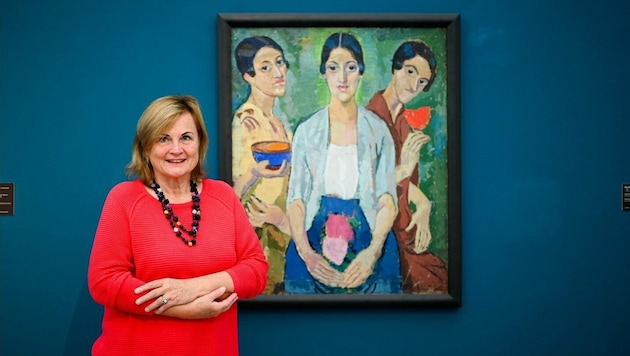

"It was never boring," says Elisabeth Nowak-Thaller, Deputy Director of Lentos in Linz. She was in charge of the city's art collection for 38 years - now she is retiring. In the "Krone" interview, she talks about Peter Baum, her first boss, highlights and why crowd-pullers have become too expensive.
 Kronen Zeitung als bevorzugte Google-Quelle hinzufügen
 The Lentos Art Museum in Linz has a long history that is not only linked to Peter Baum, the first director of Lentos, but also to art historian Elisabeth Nowak-Thaller.
She was in charge of the City of Linz's art collection for 38 years, helped with the spatial conception and planning of Lentos and curated important exhibitions such as the recent "Journey of Images". She has been retired since November 1.
"Krone": You started working as an art historian at the Neue Galerie der Stadt Linz - the predecessor institution of Lentos - in 1986. Can you still remember the early days?
Elisabeth Nowak-Thaller: I immediately had to inventory a mountain of books, an estate that we had received.
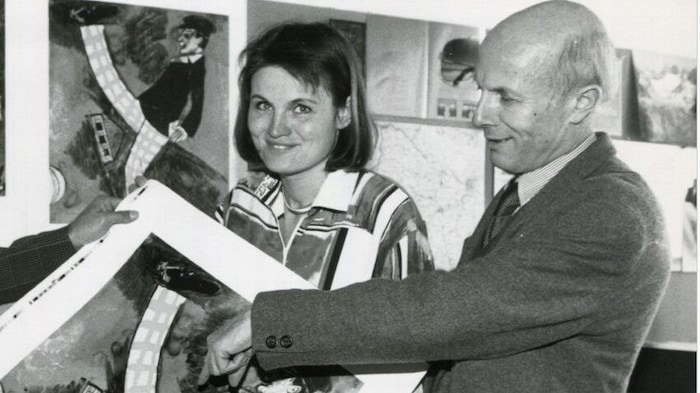
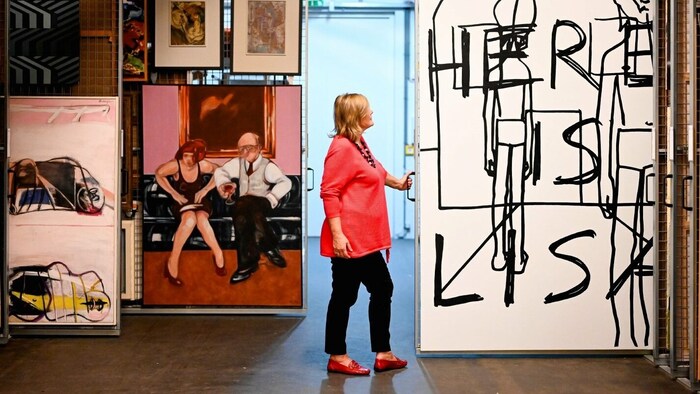
What was it like to work with Peter Baum?
He was always quite strict, but he also saw that I was very practical. We complemented each other well. The division of labor went so far that we always operated as 'Brother Baum and Sister Thaller' in the magistrate's office, as the Neue Galerie was a magistrate's office.
When did you have your first exhibition?
It was "Paula's Home" in 2004 at Lentos under Stella Rollig, where I learned how to curate independently.
You have curated around 70 exhibitions. Is it still possible to discover artists nowadays?
Yes, I discovered Helene Funke (1869 - 1957), so she is very close to my heart. I curated the first solo exhibition of her works in 2007. And her fate touches me deeply because it shows how difficult it was for women in art.
Gottfried Helnwein (2006) and Gilbert & George (2011) at Lentos were real crowd-pleasers. Such strong magnets have been missing in recent years. Why is that?
We don't have the money for really big international exhibitions. The 'Journey of Images' was an exception; we were able to secure special budgets thanks to the Capital of Culture.
What has become so expensive?
The transportation. In the past, only the greatest masterpieces traveled by courier, now almost every work travels by courier. And many paintings need a climate-controlled crate; in the past, works often came in cardboard packaging. But the sums insured have also increased.
You were also in charge of restitutions - the return of works expropriated during the Nazi era.
Restitution was one of my main areas of responsibility from the very beginning, which ultimately culminated in the 'Journey of the Pictures' exhibition. The Lentos restituted 12 works from the Gurlitt Collection, and 13 in total. It is a painful process because some of the paintings have been known and preserved for a long time. But of course it is completely justified that works that once belonged to persecuted people are restituted.
Tell us something else: what will save you from pension shock?
I'm going on a cultural trip to Mexico - a long-cherished wish. Then I'll be a freelance curator at Lentos and will be working on the Hauser Collection. For the first time in my life, I have a contract for work!
This article has been automatically translated,
read the original article here.











Da dieser Artikel älter als 18 Monate ist, ist zum jetzigen Zeitpunkt kein Kommentieren mehr möglich.
Wir laden Sie ein, bei einer aktuelleren themenrelevanten Story mitzudiskutieren: Themenübersicht.
Bei Fragen können Sie sich gern an das Community-Team per Mail an forum@krone.at wenden.