Explosive situation
NATO states call for “de-escalation” in Syria

The USA, Germany, France and the UK issued a joint statement on Sunday calling for "de-escalation" in Syria.
 Kronen Zeitung als bevorzugte Google-Quelle hinzufügen
 In view of the large-scale jihadist offensive against the troops of ruler Bashar al-Assad, they called on "all parties to de-escalate and protect civilians and infrastructure to prevent new displacements and the disruption of the transportation of humanitarian aid".
The current escalation "only underscores the urgent need" for a "political solution to the conflict", according to a statement published by the US State Department. This must be done "in accordance with UNSCR 2254", it continued.

The four states were referring to a UN resolution from 2015, which sets out a timetable for ending the conflict with a ceasefire, the formation of a transitional government within six months, the drafting of a new constitution and elections within 18 months.
Background
- The jihadist group Hajat Tahrir al-Sham (HTS), the Syrian branch of the Al-Qaeda terror network, and allied groups launched a surprising major offensive against Syrian government troops on Wednesday.
- According to the Syrian Observatory for Human Rights, more than 400 people have already been killed in the fiercest fighting since 2020, including more than 60 civilians.
Fear is spreading among the population
Following the rebel offensive on Aleppo in north-western Syria, people living in the city of millions are reporting fear. Chalid Imad is particularly worried about the possibility of further Russian or Syrian airstrikes on the city, as he told dpa. According to him, many residents feel the same way.
Many people are currently avoiding the large markets in the city for fear that they could be targeted by airstrikes, which the government and its ally Russia want to use to drive the opposition rebels out of the city. They did their shopping on smaller streets, reported the Syrian, who lives in the west of Aleppo. According to him, food is currently available everywhere. Mohammed Hanan is also afraid of the government troops - and their announced counter-offensive on the city. "This is endangering the lives of thousands of civilians," he said, expressing his concern.
The roads are empty
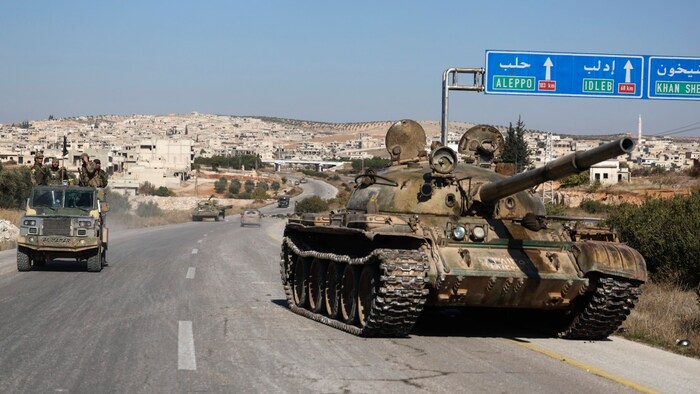
Local resident Malak Abdul-Rahman, on the other hand, also sees other threats in the current situation. "Cars with armed groups are driving through the streets and markets of Aleppo," she says. She is certain that this is why there are far fewer people out and about than usual. The streets are empty. The rebels have also blocked roads, which is why people are currently unable to leave the city.
Thousands fled
Thousands of people left Aleppo after the offensive began. Some also fled the city on foot, eyewitnesses told dpa. Most of his neighbors left for fear of fighting between the rebels and the Syrian army, said Ahmed Ibrahim. Many residents of his neighborhood in the east of the city had left when the rebels marched into western Aleppo.
The city in north-western Syria was already the scene of heavy fighting between rebel groups and government troops in the early years of the civil war, which broke out in 2011. At that time, the insurgents were forcibly driven out of the eastern part of the city by the Syrian military and its allies.
This article has been automatically translated,
read the original article here.











Da dieser Artikel älter als 18 Monate ist, ist zum jetzigen Zeitpunkt kein Kommentieren mehr möglich.
Wir laden Sie ein, bei einer aktuelleren themenrelevanten Story mitzudiskutieren: Themenübersicht.
Bei Fragen können Sie sich gern an das Community-Team per Mail an forum@krone.at wenden.