Because of clothing donations
Customs block aid supplies to Romania
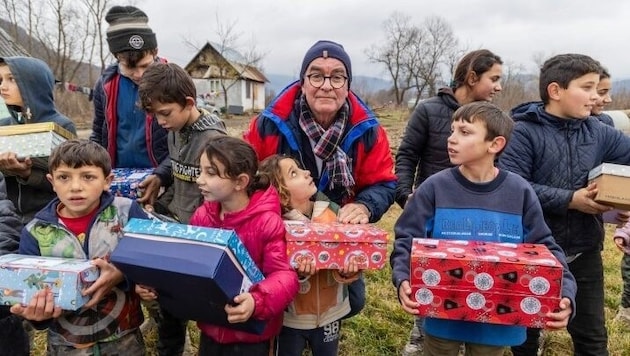

An Upper Austrian initiative has been delivering food and clothing to Romania for years, but has been failing because of the local authorities since last year: They don't want to let trucks full of donated clothing into the country, as it is not a "garbage dump".
 Kronen Zeitung als bevorzugte Google-Quelle hinzufügen
 Wolf-Dieter Pichler (70) from Styria has been supporting the poorest of the poor in Romania and other parts of the world for 30 years. In 2017, he founded the "Altesachen - Freudemachen" association together with his wife Elfriede (67) and a few fellow campaigners and has repeatedly delivered donated food, clothing and shoes to Romania and Ukraine. "Most recently, we sent around 300 used windows to both countries, which were installed in old houses and hospitals there," says the former construction manager.
The clothes are dirty
He keeps visiting companies, businesses and politicians, asking for donations and relief supplies. But since last year, the association has been struggling with a particular problem. "At Christmas 2023, we were suddenly no longer allowed to import clothing to Romania, as customs pointed out that the clothing was dirty and that we were not the 'garbage dump of Western Europe'. Unfortunately, our truck had to turn back, which meant higher transport costs again," says Pichler.
Romanian ambassador contacted
But because he doesn't give up so easily, he tried everything - so far in vain. He wrote countless letters, even to the Romanian ambassador in Vienna. Although he thanked him for his efforts, he also had an explanation for the strict controls at the borders: "As Romania has been literally flooded with waste shipments, especially textiles, in recent years, measures have been taken by the Ministry of the Environment to curb this phenomenon. Unfortunately, as an embassy, we have no authority to influence the actions of the border police or customs officials."
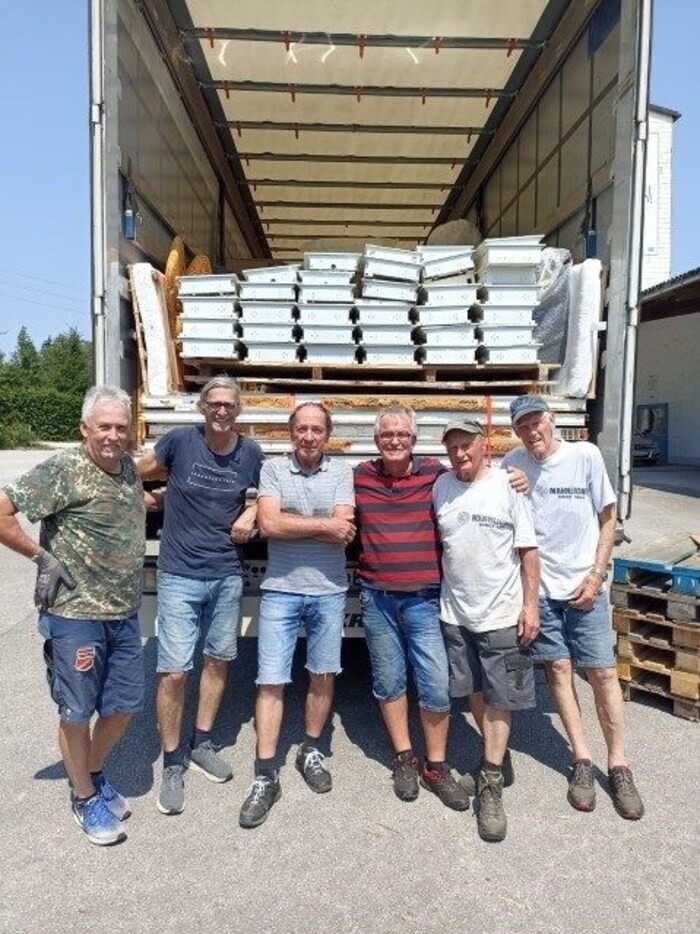
350 signatures of support
Pichler also asked LH Thomas Stelzer, sent 350 signatures of support and wanted confirmation that the clothing was not old textiles but cleaned donations. "Of course, we can't issue that because we don't know what's in the truck at the end," said the governor's office. However, Wolf-Dieter Pichler was given a to-do list and it was also pointed out that the clothing absolutely had to be disinfected.
The warehouse is full to bursting
Pichler, who had hoped for more, is disappointed, but he can't be stopped. "There are currently 62 pallets of food in our warehouse, around 55 tons, which will be loaded and then taken to Romania and Ukraine in two trucks. We will be involved in this transport ourselves again to help with the distribution," he says.
This article has been automatically translated,
read the original article here.











Da dieser Artikel älter als 18 Monate ist, ist zum jetzigen Zeitpunkt kein Kommentieren mehr möglich.
Wir laden Sie ein, bei einer aktuelleren themenrelevanten Story mitzudiskutieren: Themenübersicht.
Bei Fragen können Sie sich gern an das Community-Team per Mail an forum@krone.at wenden.