Pleasure versus conscience
Why Lower Austrians eat so much meat
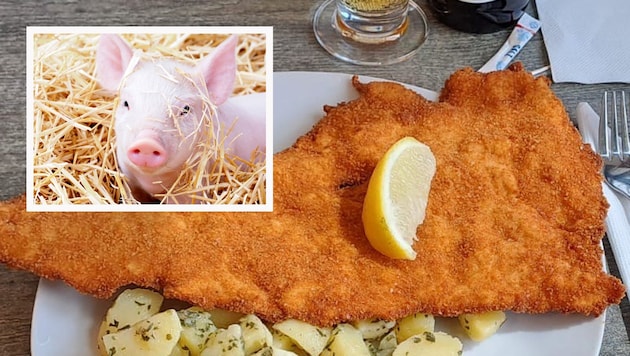

A study by the University of Applied Sciences Wiener Neustadt proves that culinary preferences outweigh the negative consequences of meat consumption. We are tricking ourselves, so to speak - what "cognitive dissonance" is all about.
 Kronen Zeitung als bevorzugte Google-Quelle hinzufügen
 We all know that we should eat less meat. And while per capita consumption has recently fallen slightly nationwide, the 86.6 kilos of meat that each of us eats on average per year is still too much, according to experts. In addition to the positive effects that a primarily plant-based diet would have on our bodies, it would also be good for the climate. The Wiener Neustadt University of Applied Sciences has now conducted a study into the question of why meat consumption in this country remains so high despite better knowledge.

Although consumers are aware of the negative consequences, they find it difficult to change their behavior. What stops them?
Tatjana Kwasny, FH Wiener Neustadt
"Although consumers are well aware of the negative consequences of meat production on the environment, many find it difficult to change their behavior," explains research associate Tatjana Kwasny. She and her colleagues came across a psychological phenomenon known as "cognitive dissonance". This occurs when the knowledge of the negative consequences of actions does not match the actual behavior. "Our results show that many people use unconscious strategies to justify meat consumption to themselves. This includes, for example, relativizing the effects on the climate or deliberately avoiding information about environmental damage, for example by ignoring reports in the media," says Kwasny.

Animal health weighs more than environmental issues
Previous studies have mainly focused on the link between animal suffering and cognitive dissonance and have shown that consumers eat less meat if they are concerned with inappropriate animal husbandry in the meat industry. The research at the University of Applied Sciences Wiener Neustadt closes an important gap: For the first time, it is investigating whether information on environmental impact also has similar effects.
"Resolving this unpleasant feeling of dissonance, which we can observe in our research, is a natural method that people use in decision-making situations in which they are torn," describes Sarah Marth, head of the Master's degree program in Business Consulting and Corporate Management. Her findings provide important information on how, for example, information campaigns can be designed more effectively to reach people.
This article has been automatically translated,
read the original article here.











Da dieser Artikel älter als 18 Monate ist, ist zum jetzigen Zeitpunkt kein Kommentieren mehr möglich.
Wir laden Sie ein, bei einer aktuelleren themenrelevanten Story mitzudiskutieren: Themenübersicht.
Bei Fragen können Sie sich gern an das Community-Team per Mail an forum@krone.at wenden.