Older than expected
“Birth date” of the moon must be corrected
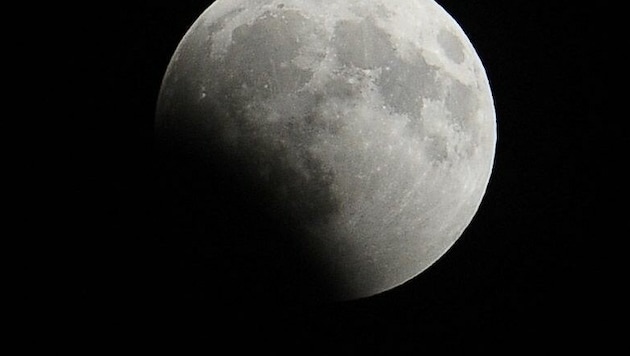

Last year, analyses of the lunar dust collected during the Apollo 17 mission revealed that the Earth's satellite is older than previously assumed. Now, following work by a trio of researchers from the USA, France and Germany, these assumptions have been confirmed once again and the age of the moon has been further increased.
 Kronen Zeitung als bevorzugte Google-Quelle hinzufügen
 According to the latest analyses, the moon is between 80 and 180 million years older than previously assumed. This is because the age of most rock samples from the moon's surface reflects the cooling of this magma and not the formation of the moon, according to the researchers in the journal "Nature". Shortly after the formation of the primordial Earth around 4.5 billion years ago, there was another huge crash in the solar system: the Mars-sized celestial body Theia collided with the primordial Earth. The collision catapulted large quantities of glowing rock from the crust and mantle of the two celestial bodies into space - the moon was formed from these remnants of the planetary catastrophe.
But when exactly did this happen? Rock samples brought to Earth by the "Apollo" astronauts and a series of unmanned missions provided an age of 4.35 billion years for the cooling of the lunar surface. This was therefore previously considered to be the age of the Earth's satellite. However, the researchers also found crystalline inclusions in the lunar rock, so-called zircons, which were older. This raised doubts about the assumed age of the moon.
"Rejuvenation" of the surface by magma
Francis Nimmo from the University of California, Thorsten Kleine from the Max Planck Institute for Solar System Research and Alessandro Morbidelli from the University of Sorbonne have now presented a solution to the dilemma. The newly formed moon initially followed a highly elliptical orbit very close to the Earth. In the process, the Earth satellite went through a phase of very strong tidal forces that heated up its interior, transported magma to the surface and thus caused an apparent rejuvenation. The conclusion: the moon could even be up to 4.53 billion years old!
This article has been automatically translated,
read the original article here.











Da dieser Artikel älter als 18 Monate ist, ist zum jetzigen Zeitpunkt kein Kommentieren mehr möglich.
Wir laden Sie ein, bei einer aktuelleren themenrelevanten Story mitzudiskutieren: Themenübersicht.
Bei Fragen können Sie sich gern an das Community-Team per Mail an forum@krone.at wenden.