Perfect breeding grounds
Deforestation in the Amazon region increases the risk of malaria

Heavy deforestation in the Amazon region in Brazil is not only having a devastating ecological impact, but is apparently also leading to more cases of malaria. Scientists were able to prove this after analyzing data from two decades.
 Kronen Zeitung als bevorzugte Google-Quelle hinzufügen
 After evaluating data from 2003 to 2022, a team from the USA and Brazil came to the conclusion that a one percent increase in the monthly deforestation rate leads to an average 6.3 percent increase in malaria cases just one month later.
The influence of rainforest destruction on the risk of malaria varies from state to state, writes the research group in the "Proceedings" of the US National Academy of Sciences ("PNAS"). However, the results suggest that deforestation is associated with an increase in malaria cases one month later.
Good conditions for breeding sites after deforestation
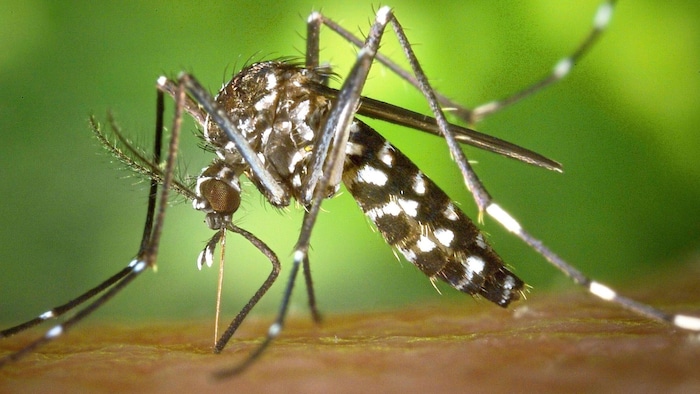
According to the team led by Burton H. Singer from the University of Florida and Marcia C. Castro from the Harvard T.H. Chan School of Public Health in Boston, the reason for this may be that the mosquito Nyssorhynchus darlingi, which is mainly responsible for the transmission of malaria in Brazil, finds more favorable breeding conditions after deforestation.
They prefer breeding habitats with clean and partially sunlit water, with aquatic vegetation, but free of decomposing organic matter. In natural forests, where light is usually scarce, these conditions are rarely present. At the edge of logging areas, on the other hand, mosquitoes often find ideal breeding conditions. The probability of contact between humans and mosquitoes is also higher there.
Malaria can be fatal if left untreated
Malaria is one of the most common infectious diseases worldwide. The pathogen is transmitted by mosquitoes. The disease initially manifests itself through fever, headaches, aching limbs and diarrhea and can be fatal if left untreated. According to the World Health Organization (WHO), an estimated 249 million people in 85 countries around the world contracted malaria in 2022, and 608,000 people died from it. Most of the fatalities were children under the age of five.
This article has been automatically translated,
read the original article here.











Da dieser Artikel älter als 18 Monate ist, ist zum jetzigen Zeitpunkt kein Kommentieren mehr möglich.
Wir laden Sie ein, bei einer aktuelleren themenrelevanten Story mitzudiskutieren: Themenübersicht.
Bei Fragen können Sie sich gern an das Community-Team per Mail an forum@krone.at wenden.