Current study
Who is better protected against urinary tract infections?
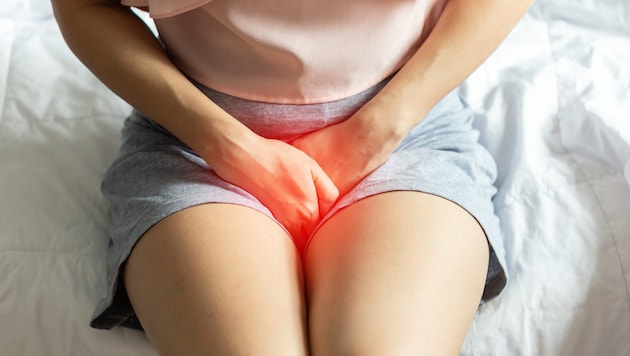

Burning when urinating, frequent urge to urinate, pain in the abdomen - these are typical symptoms of a bladder infection. Scientists have now investigated whether a certain protein may be the reason why some people suffer from urinary tract infections less frequently than others.
 Kronen Zeitung als bevorzugte Google-Quelle hinzufügen
 Bladder infections are usually triggered by so-called uropathogenic E. coli bacteria. These bind to the cells of the bladder, ureter or urethra with their thread-like projections, the so-called pili, and thus set the infection in motion. Incidentally, women are affected more frequently than men.
Protein inhibits the infection
A certain endogenous protein, uromodulin, offers protection against infection with the bacteria: around 70 percent of all people carry it in their genetic material, which means that they produce particularly large quantities of this protective protein. As a result, they have a lower risk of contracting a urinary tract infection, as reported on the "German Health Portal".
How the protection works
Until recently, however, it was not known exactly how the protein prevents inflammation. This has now been discovered by a team of three research groups from ETH Zurich together with researchers from the University of Zurich and the Children's Hospital Zurich: The scientists have now investigated what uromodulin looks like and how it neutralizes the coli bacteria.
First, the Swiss researchers analyzed how the protein binds to the bacterial pili. "Although it was already known that binding takes place and that this probably contributes to the protective function, no further details were known," explains Dr. Gregor Weiss from ETH Zurich, one of the first authors of the study.
The biochemical tests showed that the bacterial pili recognize certain sugar chains on the surface of the uromodulin and bind to them, literally enveloping them. "This neutralizes the pathogens," explains Weiss. "Shielded in this way, they can no longer bind to the cells in the urinary tract and therefore cannot trigger an infection."
Under the microscope, the team also recognized that large clumps of hundreds of uromodulin components and E. coli cells, which are then presumably simply excreted in the urine.
Treatment and drug development
The work provides indications for antibiotic-free treatment and prevention of urinary tract infections. Until now, patients have often been given preparations containing the sugar mannose. This prevents the E. coli bacteria from attaching to the cells of the urinary tract to a certain extent.
"Thanks to our analyses, we now know that the bacteria use their pili to recognize other sugars on the uromodulin in addition to mannose," explains doctoral student Jessica Stanisich, another first author of the study. "This could indicate that treatment with combined sugar preparations would be more effective."











Da dieser Artikel älter als 18 Monate ist, ist zum jetzigen Zeitpunkt kein Kommentieren mehr möglich.
Wir laden Sie ein, bei einer aktuelleren themenrelevanten Story mitzudiskutieren: Themenübersicht.
Bei Fragen können Sie sich gern an das Community-Team per Mail an forum@krone.at wenden.